For decades, poultry production in the United States has been dominated by systems that prioritize convenience, confinement, and output over ecological balance. Even among small-scale and pasture-based producers, chickens are often managed in ways that unintentionally create soil degradation, disease pressure, and declining bird health. In regenerative agriculture, however, poultry is not viewed as an isolated enterprise. Chickens are part of a living system, one that depends on soil biology, plant diversity, and animal movement. Rotational grazing is the practice that connects these elements, transforming poultry from a management challenge into a regenerative force.
Rotational grazing is often associated with cattle or sheep, but its application to poultry is just as critical. When birds are moved intentionally across land, rather than left to concentrate in one area, the results are healthier animals, stronger pasture, and more resilient farms. In regenerative poultry systems, rotational grazing is not an optional enhancement; it is the missing link that makes everything else work. Farmer Mike Brescia has seen this firsthand. By moving his flocks regularly, Mike reduces disease pressure, improves nutrient distribution, and allows grasses and forages time to recover, creating a balanced system where animals and land thrive together rather than compete for resources.
Rotational Grazing for Chickens
At its core, rotational grazing means moving animals frequently across pasture to prevent overuse of any single area. For poultry, this usually involves mobile coops, shelters, or fencing that allow birds to access fresh ground on a regular schedule, often daily or every few days.
Unlike stationary coops, which concentrate manure, feed waste, and foot traffic in one place, rotational systems distribute impact evenly. Chickens are allowed to express natural behaviors such as scratching, pecking, and foraging, but they do so without destroying vegetation or compacting soil. The land receives a pulse of fertility followed by adequate rest, which is a foundational principle of regenerative land management.
This movement mimics natural grazing patterns found in healthy ecosystems. In the wild, birds do not remain in one location indefinitely. They follow food availability, insect cycles, and seasonal changes. Rotational grazing recreates these dynamics in a managed, intentional way.
Why Stationary Poultry Systems Fail Over Time
Even well-intentioned poultry keepers often experience problems when birds remain in one area. Bare ground, mud, odor, fly pressure, and disease outbreaks are common symptoms. These issues are often blamed on climate, predators, or feed quality, but the root cause is almost always lack of movement.
When chickens stay in one place, manure accumulates faster than soil biology can process it. Nitrogen overload damages plant roots and disrupts microbial life. Vegetation disappears, leaving exposed soil that becomes compacted and anaerobic. Once this happens, pathogens thrive while beneficial organisms decline.
Bird health deteriorates alongside land health. Chickens in degraded environments are more prone to parasites, respiratory issues, and stress-related behaviors. Egg production often declines, and mortality rates increase. Many producers respond by adding supplements, medications, or infrastructure, but these interventions treat symptoms rather than addressing the underlying system failure.
Rotational grazing reverses this cycle by aligning poultry management with ecological principles rather than fighting against them.
The Foundation of Regenerative Poultry
Soil is not dirt. It is a living ecosystem. Healthy soil contains billions of microorganisms that cycle nutrients, build structure, and support plant growth. Poultry plays a powerful role in this system when managed correctly.
As chickens move across pasture, they deposit manure in small, evenly distributed amounts. This manure feeds soil microbes, which convert nutrients into plant-available forms. The result is increased organic matter, improved water infiltration, and stronger root systems.
Equally important is rest. After chickens leave an area, the land is allowed to recover. Plants regrow, microbial populations stabilize, and soil structure improves. This rest period is what turns poultry impact into regeneration rather than degradation.
Over time, rotationally grazed poultry systems develop deeper topsoil, greater forage diversity, and improved resilience to drought and heavy rainfall. These benefits compound year after year, creating land that is more productive with fewer external inputs.
Pasture Health and Forage Diversity
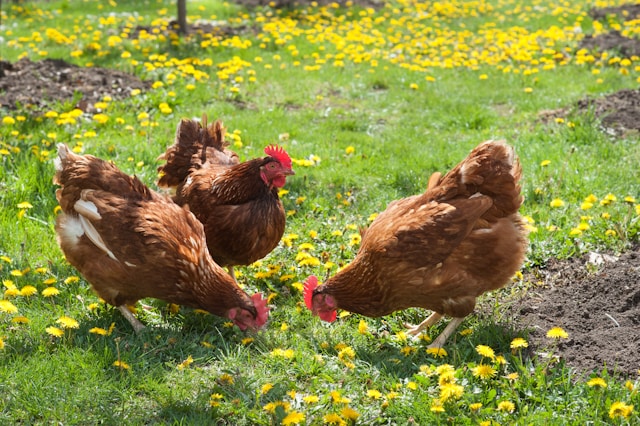
Chickens are often underestimated as grazing animals, but they interact with pasture in meaningful ways. They selectively forage on tender plants, seeds, and insects while scratching lightly at the soil surface. In rotational systems, this activity stimulates plant regrowth rather than destroying it.
Frequent movement prevents overgrazing and allows a wide variety of plant species to thrive. Grasses, legumes, and forbs coexist, each contributing unique benefits to soil health and animal nutrition. Diverse pastures support stronger insect populations, which in turn provide natural protein sources for birds.
This diversity directly impacts poultry nutrition. Birds with access to varied forage produce eggs and meat with more complex nutrient profiles. Yolk color deepens, shell quality improves, and overall bird vitality increases. These outcomes are not the result of supplements or additives, but of ecological alignment.
Disease and Parasite Control Through Movement
One of the most overlooked advantages of rotational grazing is natural disease control. Many poultry parasites and pathogens rely on continuous host presence to complete their life cycles. When birds remain in one area, these organisms build up rapidly.
Movement disrupts this cycle. By the time chickens return to a previously grazed area, parasite loads have declined and environmental conditions are less favorable for disease. Sunlight, desiccation, and microbial competition all contribute to this natural sanitation process.
Rotational grazing also reduces stress, which is a critical factor in immune function. Birds that are not confined to filthy or overcrowded conditions are better able to resist illness. In regenerative systems, disease prevention is achieved through design rather than medication.
Animal Welfare and Natural Behavior
Regenerative agriculture places animal welfare at the center of production, not as an afterthought. Chickens evolved to move, forage, and interact with complex environments. Rotational grazing honors these instincts.
Birds in rotational systems exhibit calmer behavior, stronger social structures, and fewer aggressive interactions. They spend their days engaged in meaningful activity rather than pacing or pecking at one another. Access to fresh ground reduces boredom and stress, which are major contributors to behavioral problems.
From an ethical standpoint, rotational grazing allows poultry to live in a way that aligns with their biological needs. This not only improves quality of life for the animals but also strengthens the integrity of the food system as a whole.
Economic and Operational Benefits for Farmers
While rotational grazing requires planning and labor, it often reduces overall costs in operations. Healthier birds mean lower veterinary expenses and fewer losses. Improved pasture productivity reduces feed dependency. Stronger soils reduce the need for fertilizers or reseeding.
Rotational systems also scale more effectively than many assume. By focusing on efficiency of movement rather than size of infrastructure, farmers can expand poultry enterprises without dramatically increasing overhead. Mobile coops, electric netting, and thoughtful layout make rotation manageable even on small properties.
Perhaps most importantly, rotational grazing creates resilience. Farms that rely on living systems rather than constant inputs are better equipped to adapt to weather extremes, market shifts, and supply disruptions.
Managing Poultry Systems Through Winter and Limited Rotation Periods
Even the most well-designed rotational poultry systems eventually face seasonal constraints. In colder climates, winter weather, frozen ground, heavy snow, and saturated soils can temporarily limit or completely prevent regular movement of birds. Regenerative management does not ignore these realities, yet it adapts to them with intention.
The goal in winter shifts from active regeneration to protection: safeguarding bird health, soil integrity, and system resilience until movement can resume.
Deep Bedding During Winter
Deep bedding is one of the most effective tools for maintaining poultry health during periods of limited rotation. Rather than removing manure daily, farmers layer carbon-rich materials such as straw, wood shavings, leaves, or chopped hay directly over existing bedding. This creates a living compost system beneath the birds.
As manure accumulates, beneficial microbes begin breaking it down, generating small amounts of heat and binding moisture. When managed correctly, deep bedding remains dry on the surface, reduces odor, and dramatically lowers disease pressure. Harmful pathogens struggle to thrive in a biologically active, carbon-balanced environment.
From a regenerative perspective, deep bedding is not waste, it is future fertility. Once winter ends, this material can be composted or applied to fields, gardens, or orchards, returning nutrients to the soil in a stable, usable form.
Preventing Disease When Movement Is Limited
Lack of rotation increases disease risk if systems are not adjusted accordingly. Deep bedding helps, but it must be paired with careful management. Adequate ventilation is essential to prevent moisture buildup and respiratory issues, especially in cold conditions where farmers may be tempted to seal coops too tightly.
Feed and water placement also matters. Keeping these areas elevated and dry reduces manure contamination and discourages harmful bacterial growth. Regularly stirring or adding bedding prevents compaction and encourages aerobic decomposition.
Stocking density should be adjusted during winter confinement periods. Fewer birds in a space means less moisture, less stress, and fewer opportunities for disease transmission. In regenerative systems, winter is a time to prioritize animal well-being over output.
Protecting Soil and Pasture During Dormancy
Winter soils are particularly vulnerable to compaction and damage. When vegetation is dormant and soil structure is fragile, rotational grazing may do more harm than good. Holding birds in designated winter areas prevents widespread degradation and allows pastures to rest fully.
These sacrifice areas should be chosen carefully, ideally on well-drained ground with access to wind protection and sunlight. Adding thick bedding layers protects underlying soil while capturing nutrients that would otherwise be lost.
By intentionally concentrating winter impact, farmers preserve the health of the broader landscape and set the stage for rapid recovery in spring.
Transitioning Back to Rotation in Spring
As soils thaw and vegetation begins to grow, gradual reintroduction of rotational grazing is critical. Moving birds too early can damage emerging plants and compact wet soil. Patience during this transition protects the long-term success of the system.
Once rotation resumes, winter bedding compost can be spread across pasture or used in the garden, completing the nutrient cycle. Feeding animals, capturing fertility, and returning it to the land is a hallmark of regenerative poultry management.
Winter as a Strategic Pause, Not a Failure
In regenerative agriculture, winter is a planning season. Temporary confinement does not negate the benefits of rotational grazing; it simply requires thoughtful adjustments. Systems designed with flexibility in mind continue to function biologically even when movement slows.
By using deep bedding, managing moisture, reducing stress, and protecting dormant soils, farmers ensure that poultry remains healthy and productive through winter. When spring arrives, birds return to pasture stronger, land rebounds faster, and the regenerative cycle continues uninterrupted.
Whole-Farm Systems
In a farming system, chickens are often integrated with ruminants, gardens, or orchards, where rotational grazing amplifies benefits across the farm.
Following cattle or sheep, chickens spread manure, consume fly larvae, and add additional fertility. In orchards, they manage insects and ground cover while contributing nutrients. In gardens, they prepare beds and recycle organic waste when managed carefully.
These integrations are only possible when poultry is mobile. Rotational grazing allows chickens to function as ecological partners rather than isolated units, strengthening the entire farm’s ecosystem.
Why Rotational Grazing Defines Regenerative Poultry
The difference between pasture-based poultry and regenerative poultry lies in intention and execution. Simply placing chickens outdoors does not guarantee soil health, animal welfare, or ecological benefit. Without movement, even outdoor systems can degrade land and compromise bird health.
For farmers, homesteaders, and land stewards seeking to build truly sustainable poultry systems, rotational grazing is the foundation. When birds move in harmony with land cycles, poultry becomes a force for renewal rather than depletion. In regenerative agriculture, that distinction makes all the difference.