Across the United States, agriculture feeds millions, but the way food is produced matters just as much as the volume. Recent investigations into farm labor conditions have drawn renewed attention to the human cost embedded in large-scale commercial farming systems. Wage theft, unsafe working environments and weak regulatory oversight are not isolated incidents; they are symptoms of a production model designed around efficiency, scale, and cost minimization above all else.
In contrast, regenerative farming operates under a fundamentally different set of priorities. While not immune to challenges, regenerative farms tend to be smaller, locally rooted, and structurally less prone to the systemic labor abuses that plague industrial agriculture. In the following article, Michael William Brescia compares these two models to reveal how farming practices, scale, and values directly shape outcomes for workers, communities, ecosystems, and consumers.
The Structural Reality of Commercial Agriculture
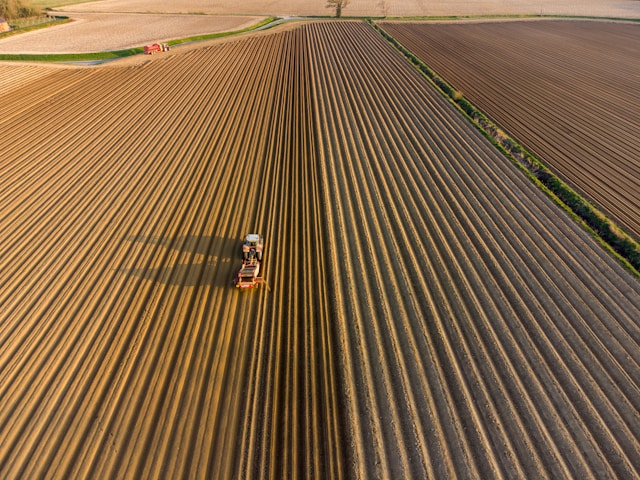
Modern commercial farming is built on scale. Vast acreages, monoculture crops, centralized processing, and global supply chains define the system. To remain competitive in a market driven by low consumer prices and high retailer leverage, many operations depend on minimizing labor costs. This pressure often cascades down to farmworkers.
Large commercial farms frequently rely on labor contractors or temporary visa programs to recruit workers, creating layers of separation between farm owners and those doing the physical labor. This distance can obscure accountability. When violations occur, such as unpaid wages, unsafe housing, excessive hours, or retaliation for speaking out, workers may have little recourse. Inspections are infrequent, penalties are often modest, and enforcement capacity is limited.
Because commercial agriculture emphasizes uniformity and output, labor is treated as a variable cost rather than a relationship. Workers are interchangeable inputs, not long-term stakeholders. This structural reality helps explain why abuse persists even when laws exist on paper to prevent it.
Why Compliance Programs Exist in Industrial Systems
Programs like the Fair Food Program emerged precisely because commercial agriculture has struggled to self-regulate. These initiatives attempt to graft accountability onto an otherwise extractive system by introducing audits, codes of conduct, and buyer enforcement mechanisms. Where implemented, they have improved conditions, but their limited reach highlights the difficulty of reforming a system designed around scale and speed.
Compliance programs are necessary in industrial agriculture because the system itself does not naturally align with worker well-being. Oversight must be external, enforcement must be contractual, and incentives must come from powerful buyers rather than from within the farming operation.

Regenerative Farming – A Different Foundation
Regenerative farming operates on an entirely different premise. Instead of maximizing short-term yield, it focuses on long-term soil health, ecosystem resilience, and community integration. These farms are typically smaller, diversified, and locally oriented. Livestock and crops are managed through rotational systems, mixed species plantings, and adaptive practices that respond to land conditions rather than forcing uniformity.
This shift in scale and philosophy has profound implications for labor.
On regenerative farms, workers are often part of a small, consistent team. Many are local residents, family members, or long-term employees rather than seasonal laborers recruited through third-party contractors. Because the workforce is visible and relationships are direct, abusive practices are harder to conceal and less likely to occur.
Regenerative farming depends on skilled observation, adaptability, and stewardship. Workers are valued for their knowledge and continuity, not just their output. This naturally fosters safer conditions, clearer communication, and greater mutual accountability.
Systemic Risk vs. Structural Safeguards
In commercial agriculture, labor exploitation is a systemic risk amplified by size, anonymity, and economic pressure. Workers often lack bargaining power, face language barriers, and fear retaliation or deportation if they report violations.
Regenerative farms, by contrast, rarely operate at a scale that requires anonymous labor pools. Workforces are smaller, oversight is constant, and transparency is built into daily operations. While no system is perfect, the conditions that allow widespread abuse, like distance, disposability, and opacity are largely absent.
Moreover, regenerative farms typically sell directly to consumers through farmers markets, CSAs, or local retailers. This proximity creates reputational accountability. Mistreatment of workers is not only ethically wrong but economically risky when customers personally know where their food comes from and who produces it.
Health, Safety, and Environmental Exposure
Commercial farmworkers often face heightened exposure to pesticides, extreme heat, and hazardous machinery. Monoculture systems rely heavily on chemical inputs, increasing health risks for those working in the fields. Long hours under production quotas further compound injury and exhaustion.
Regenerative systems significantly reduce these exposures. By prioritizing soil biology, cover crops, and integrated pest management, regenerative farms minimize or completely remove chemical use. Livestock are moved through pasture systems rather than confined operations, reducing air quality hazards. Diverse plantings moderate microclimates, offering more shade and ecological buffering.
Healthier ecosystems translate into safer workplaces. The absence of relentless production pressure allows regenerative farms to pace work around weather, daylight, and human capacity rather than rigid output targets.
Economic Pressure and Human Cost
The commercial farming model externalizes costs. Cheap food prices are often achieved by transferring risk onto workers, ecosystems, and rural communities. When margins tighten, labor conditions are among the first areas to suffer.
Regenerative farming internalizes responsibility. While products may cost more upfront, those prices reflect fairer labor practices, environmental stewardship, and long-term viability. Instead of extracting maximum value per season, regenerative farms aim for durability; economically, ecologically, and socially.
This economic model reduces the incentive to cut corners. Workers are not viewed as expendable, because continuity and trust are essential to the farm’s success.
Transparency vs. Complexity
Industrial agriculture operates through long, complex supply chains that dilute responsibility. When abuse occurs, blame is often passed between contractors, growers, and buyers.
Regenerative farms are inherently transparent. The people who plant, harvest, and care for animals are often the same people selling the food. This visibility acts as a powerful deterrent to exploitation. It also builds trust with consumers who increasingly demand ethical sourcing alongside quality.

Why Regenerative Farming Does Not Replicate These Issues at Scale
The labor abuses documented in commercial agriculture are not inevitable features of food production; they are outcomes of scale-driven systems optimized for volume and cost reduction. Regenerative farming does not replicate these conditions because it rejects the assumptions that create them.
By operating at human scale, prioritizing relationships, and embedding accountability into daily practice, regenerative farms avoid the structural vulnerabilities that make exploitation possible. They do not require massive labor pools, opaque recruitment systems, or external compliance frameworks to ensure basic dignity.
Instead, ethical treatment of workers is woven into the operational fabric of the farm.
A Broader Implication for the Food System
The contrast between commercial and regenerative farming raises an important question: Should worker protection rely on corrective programs layered onto flawed systems, or should it be a natural outcome of how food is produced?
Regenerative farming suggests that when agriculture is designed around health of soil, ecosystems, and communities, fair labor conditions follow organically. While regenerative systems alone cannot replace industrial agriculture overnight, they offer a compelling blueprint for a more humane and resilient food system.
As consumers, policymakers, and producers confront the hidden costs of cheap food, the comparison becomes increasingly clear. The way food is grown determines not only what ends up on the plate, but who bears the burden along the way.